Shop Front LED Display: Which Type Is Right for Your Business
Window screen, fascia band, or entrance display? The wrong choice wastes budget on the wrong spot. This guide helps a shop owner decide which type fits — then quotes it factory-direct.
From US$100 — final price depends on your size, pixel pitch and finish. Contact us for an exact quote.
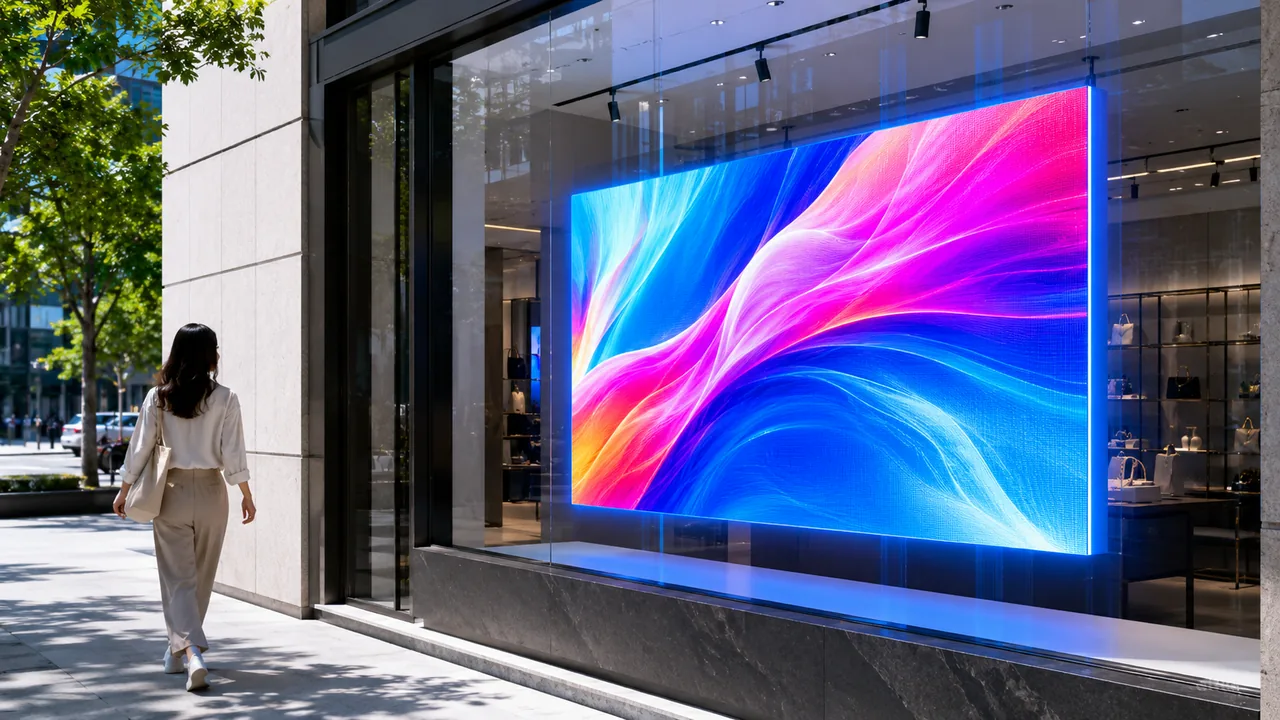
"I want an LED display on my shop front" — that is one sentence but three very different products. A window-facing screen for a street-busy retailer, a fascia band above the door for a salon, and a screen just inside the entrance for a café menu are all "shop front displays," but each suits a different situation and comes at a different price point.
This page is a decision guide, not a product page. Work through the questions below, find the type that fits your shop, and request a factory-direct quote from EKINTRY. If you have already decided you need a window screen and want the specification detail, see the storefront LED screen page.
Who custom screens are for
- Independent shops and small retailers.
- Cafés, salons, phone shops and convenience stores.
- Estate agents and service shops with street frontage.
- Franchises rolling out consistent shop-front signage.
Step 1 — where does passing footfall look?
Before anything else, answer this: where do people walking past your shop naturally look? That is where the display needs to be. The answer points directly to the right type.
- They look through the window → window screen.
- They look up at the signage band above the door → fascia band.
- They step inside before deciding → entrance display.
- Not sure? A shop with a large window and street footfall almost always benefits most from the window screen.
Step 2 — match the type to your business
Each type suits a different shop and a different goal. The table below covers the most common pairings.
Step 3 — what can go wrong (and how to avoid it)
The most common buying mistakes for small-shop displays:
- Window: installing a standard indoor TV — it washes out behind glass in daylight.
- Fascia band: buying a pitch designed for close-up reading — passers-by are 3–5m away, so P6–P10 is enough and far cheaper than P3.
- Entrance: putting it too high or in a corner — eye-level placement doubles engagement.
- All types: no content plan — a display that never changes stops being noticed within a week.
Step 4 — budget range by type
These are indicative planning figures — actual cost depends on size, brightness and pixel pitch. A fascia strip and a compact entrance screen are the most accessible entry points; a large, high-brightness window screen costs more because of the specialised build.
- Compact entrance display (43–55″ indoor) — most affordable entry point.
- Fascia LED band (custom width, P6–P10) — affordable, high visual impact.
- Window screen (high-brightness, custom size) — higher investment, highest footfall return.
| Window screen | High brightness · solid or transparent · custom-sized to window |
|---|---|
| Fascia band | Long, narrow LED strip · coarse pitch · name and offers |
| Entrance display | Indoor screen · fine pitch · menus and promotions |
| Content updates | All types: scheduled remotely, no reprinting |
| Type | Best for | Pixel pitch | Key requirement | Not suitable for |
|---|---|---|---|---|
| Window screen | Boutiques, estate agents, jewellers, food | P4–P6 (seen from street) | High brightness (4,500+ nits) | Deep-set windows in shade |
| Fascia band | Salons, cafés, convenience, franchise chains | P6–P10 (seen 3–8m) | Long, narrow custom size | Shops with no fascia above door |
| Entrance display | Restaurants, fast food, gyms, pharmacies | P2.5–P4 (close viewing) | Eye-level placement | High-footfall window shops |
Send us your project details
To recommend the right screen size, pixel pitch, cabinet type and shipping, please send us:
- Which type — window screen, fascia band, or entrance display.
- Your frontage width and where you want to mount it.
- For window: does it face direct sun?
- For fascia: the width of the band and mounting height.
- For entrance: ceiling height and viewing distance.
- Delivery country plus a photo of the shop front.
Frequently Asked Questions
I do not know which type I need — how do I decide?
Ask where passing customers look when they walk past. Through the window → window screen. At the sign above the door → fascia band. They come in first → entrance display. The table on this page guides the decision.
Can I have more than one type?
Yes — many shops combine a window screen and a fascia band, or a fascia band and an entrance display. We quote the combination as one project.
What pixel pitch do I need for a fascia band?
Passers-by read a fascia band from 3–8 m away, so P6–P10 is sufficient and much more affordable than P3. Finer pitch is wasted on a sign read from across the street.
Will a standard TV work in the window?
No — a standard TV or indoor monitor washes out behind glass in daylight. Window screens use a specialised high-brightness build.
How do I update the content?
Content is updated remotely — change offers, schedules or promotions from your phone or laptop without printing anything.
Can a small independent shop afford this?
A compact entrance display or a fascia LED strip is the most affordable entry point. We size it to your frontage and budget and quote factory-direct.