Retail LED Display: Types and How to Choose
From slim posters to feature walls and shelf-edge strips, retail LED comes in several forms. EKINTRY explains which fits, builds it to size and quotes factory-direct.
From US$100 — final price depends on your size, pixel pitch and finish. Contact us for an exact quote.
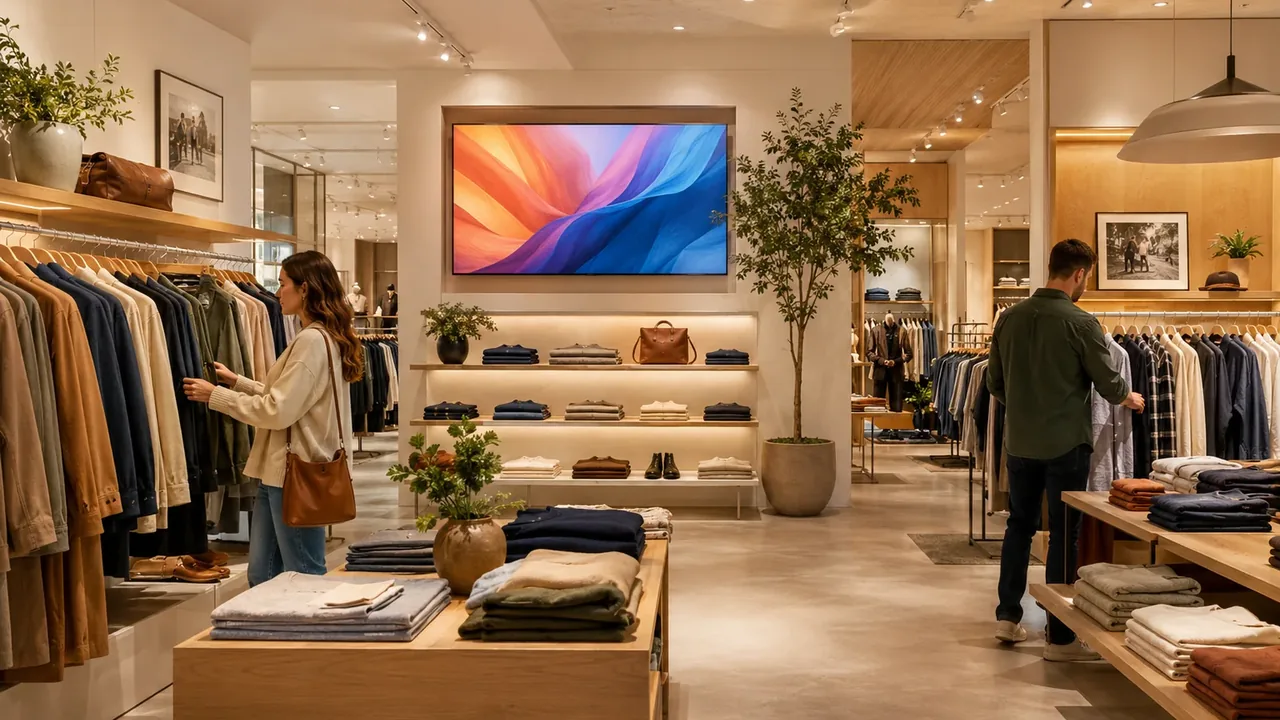
A retail LED display brightens promotions, branding and product stories inside a store. "Retail LED" is not one product, though — it ranges from a slim standalone poster to a large feature wall, a shelf-edge strip or a window screen, and the right choice depends on where it goes and how close shoppers stand.
This page breaks down the retail LED product types and the specs that matter — pixel pitch, brightness, shape — so you choose the right one. For setting-by-setting advice, see our retail-store application page; to buy, EKINTRY quotes factory-direct.
Who custom screens are for
- Retail chains and independent shops.
- Brand and flagship stores wanting a feature wall.
- Supermarkets and convenience stores.
- Retail designers, fit-out firms and integrators.
The main retail LED display types
Match the format to the job:
- Digital poster — slim standalone screen for entrances and aisles.
- Feature / brand wall — large fine-pitch LED for a statement.
- Shelf-edge & column displays — narrow strips for targeted, point-of-decision messaging.
- Window screen — high-brightness or transparent for the storefront.
Best for — and when it is the wrong choice
Retail LED works almost anywhere indoors; a few caveats:
- Right for: promotions, branding, wayfinding and product storytelling in-store.
- For a sun-facing window, use a window/storefront build, not a standard indoor retail panel.
- For a simple single promo, a digital poster is cheaper than a full wall.
Specs that matter in a store
Shoppers view in-store screens up close, so a fine pixel pitch (around P1.5–P2.5) keeps product imagery and text crisp, and 600–1,500 nits suits lit interiors. Modular build means feature walls can be flat, curved or shaped to the fixture.
How retail LED is priced
Indoor retail LED commonly runs around US$900–2,500/m², with custom or transparent builds higher. Pixel pitch is the main driver, then size, brightness and any custom shape. We quote per the format and size you choose, factory-direct.
Common mistakes to avoid
What trips retailers up:
- Buying one big wall when several posters would place messages better.
- Too coarse a pitch for a wall shoppers stand right next to.
- Using an indoor panel in a sunny window.
- No content plan — the screen needs fresh, scheduled messaging to pay off.
| Formats | Poster · feature wall · shelf-edge · window |
|---|---|
| Pixel pitch | P1.5 – P2.5 (close viewing) |
| Brightness | 600 – 1,500 nits indoor |
| Shape | Flat, curved or fixture-fit |
Send us your project details
To recommend the right screen size, pixel pitch, cabinet type and shipping, please send us:
- Format (poster, wall, shelf-edge, window).
- Approximate size and viewing distance.
- Indoor or window-facing.
- Any custom shape requirement.
- Delivery country.
Frequently Asked Questions
What types of retail LED display are there?
Digital posters, large feature/brand walls, narrow shelf-edge or column strips, and storefront window screens. The right one depends on placement and viewing distance.
What pixel pitch suits a retail store?
For close in-store viewing, a fine pitch around P1.5–P2.5 keeps product images and text sharp. We match it to your viewing distance.
How much does a retail LED display cost?
Indoor retail LED is commonly around US$900–2,500/m²; transparent or custom builds cost more. We quote by the format and size you choose.
Can it be a custom shape?
Yes — modular and flexible modules allow curved, right-angled and fixture-fit feature walls.
Poster or feature wall — which should I choose?
A poster suits a single promotion at a spot; a feature wall makes a brand statement. Often a mix places messages best — we can advise.
Do you ship internationally?
Yes — factory-direct worldwide with protective export packing.