Custom Advertising Screen Price by Type
Advertising screens span indoor promo walls to sunlit billboards, and price tracks the type. This page gives per-square-metre ranges by build, then EKINTRY prices yours factory-direct.
From US$100 — final price depends on your size, pixel pitch and finish. Contact us for an exact quote.
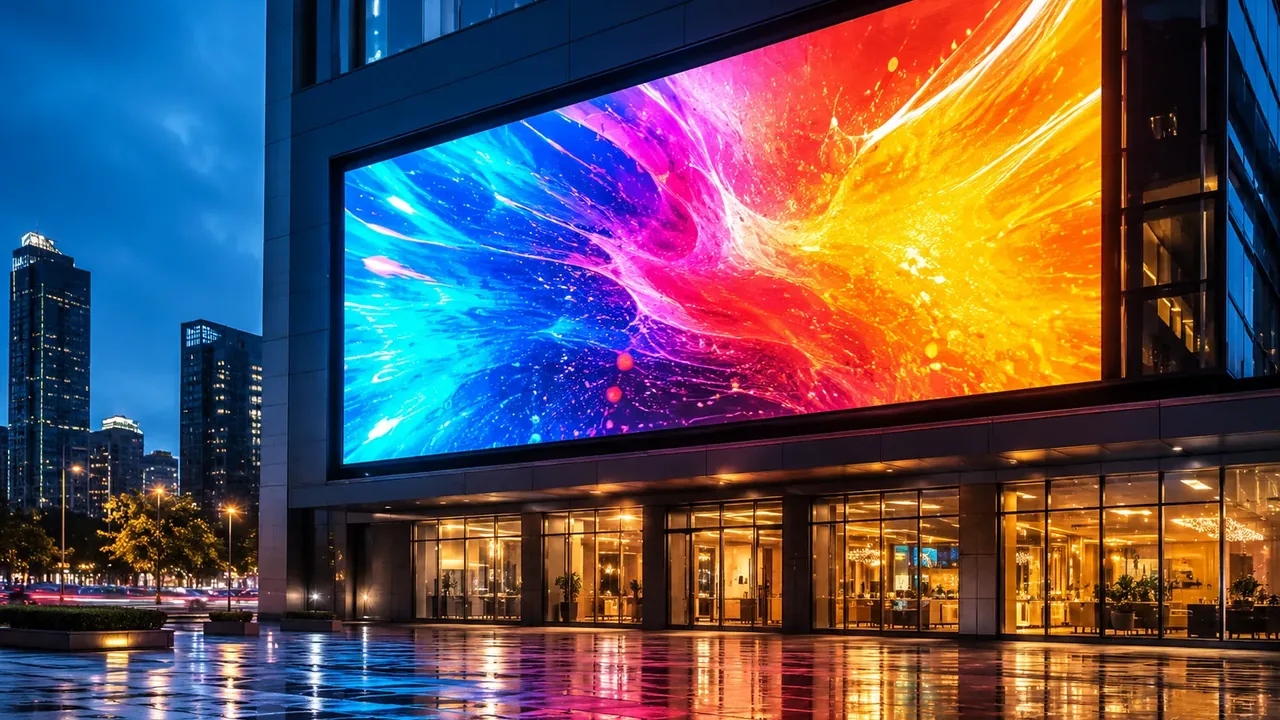
Advertising-screen price depends mostly on where the screen faces, because that sets the brightness and weatherproofing. An indoor promo wall, a sunlit outdoor billboard and a shop window all use different builds at different per-square-metre rates — so the first question for a price is the type.
This page gives realistic ranges by type and explains the brightness and double-sided premiums. For the broader advertising overview, see our custom advertising screen page; for a number, EKINTRY prices yours factory-direct.
Who custom screens are for
- Shops, malls and brands budgeting an ad display.
- Outdoor advertising and billboard buyers.
- Storefront and window-advertising buyers.
- Media owners and integrators.
Price by advertising-screen type
As a planning guide, the per-square-metre rate rises with brightness and protection:
- Indoor advertising LED — ~US$900–2,500/m².
- Outdoor advertising / billboard — ~US$1,200–4,000+/m².
- Window / storefront (high-brightness) — priced between, transparent higher.
The brightness premium
A street-facing or outdoor screen needs 4,500–8,000 nits versus ~600–1,500 for indoor, plus IP sealing and a stronger cabinet. That brightness-and-weather package is the main reason outdoor advertising screens cost more per square metre than indoor ones.
Single vs double-sided, and pitch
A double-sided ad screen is close to two screens in one chassis, so it costs more than single-sided but less than two separate units. Pixel pitch still applies: a far-viewed billboard uses a coarse, cheaper pitch, while a close-up retail ad wall needs a finer, pricier one.
When a cheaper type is the right choice
Do not pay for outdoor brightness on a sheltered indoor wall, or a fine pitch for a sign read from across the street. Matching the type and pitch to the real placement is where most budget is saved.
Common mistakes to avoid
Advertising-price pitfalls:
- Quoting an indoor build for a sunlit window, then finding it washes out.
- Paying the outdoor premium for an indoor or sheltered spot.
- Over-fine pitch for a long-distance billboard.
- Comparing single-sided and double-sided prices as if equal.
| Indoor | ~US$900–2,500/m² |
|---|---|
| Outdoor / billboard | ~US$1,200–4,000+/m² |
| Window (high-brightness) | Between; transparent higher |
| Double-sided | More than single, less than two units |
Send us your project details
To recommend the right screen size, pixel pitch, cabinet type and shipping, please send us:
- Indoor, outdoor or window-facing.
- Approximate size and viewing distance.
- Single-sided or double-sided.
- Brightness/content needs.
- Delivery country.
Frequently Asked Questions
How much does an advertising screen cost?
By type: indoor ~US$900–2,500/m², outdoor/billboard ~US$1,200–4,000+/m², with high-brightness window builds in between. Pixel pitch and brightness set the exact figure.
Why is an outdoor advertising screen more expensive?
It needs 4,500–8,000 nits, IP weatherproofing and a stronger cabinet, versus ~600–1,500 nits indoor — that package raises the per-m² price.
How much more is a double-sided screen?
It is effectively two screens in one chassis, so it costs more than single-sided but less than buying two separate units.
Does pixel pitch affect advertising-screen price?
Yes — a close-up retail ad wall needs a finer, pricier pitch; a far-viewed billboard uses a coarser, cheaper one. Match pitch to viewing distance.
How do I avoid overpaying?
Match the type and pitch to the real placement — do not buy outdoor brightness for an indoor spot, or fine pitch for a distant billboard.
How do I get an exact price?
Tell us the placement (indoor/outdoor/window), size, sided-ness and country; we price it factory-direct.